Benefits of Polymer Bathroom Surfaces: 2026 Guide
Table of Contents
- Why Polymer Bathroom Surfaces Are Gaining Ground in 2026
- Polymer Shower Walls Pros and Cons: An Honest Breakdown
- Polymer vs. Acrylic Shower Walls: What the Difference Means for You
- How to Clean Polymer Shower Walls Without Damaging the Surface
- What Is the Best Material for Shower Walls? A Decision Framework
- Durability, Moisture Resistance, and Mold Prevention: What Polymer Surfaces Deliver
- Lifecycle Cost, Installation, and Repair: What Competitors Skip
- Frequently Asked Questions
Last Updated: October 12, 2026
Why Polymer Bathroom Surfaces Are Gaining Ground in 2026
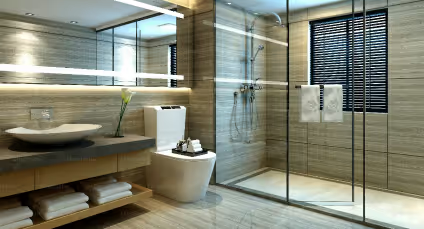
Walk into a newly renovated bathroom and you may not be able to tell whether the shower walls are stone, tile, or something else. That is the point.

A polymer bathroom surface is a molded panel or slab made from engineered plastics, acrylic, PVC, or cast polymer, rather than tile, stone, or fiberglass.
At All County One Day Bath, we have installed these surfaces for over 20 years, and the pattern is consistent: homeowners who switch from tile rarely go back.
What Counts as a Polymer Bathroom Surface
The term "polymer" covers several materials that behave differently. Acrylic is a rigid, glossy sheet, often reinforced with fiberglass. PVC panels are thinner and lighter, a budget option for quick updates. Cast polymer blends mineral fillers with resin into a dense, stone-like slab. Solid surface is thicker, seamless, and can be sanded and repaired.
The International Cast Polymer Association's material overview describes cast polymer as non-porous, stain-resistant, and resistant to denting and chipping. That combination is why the category keeps growing: fewer failure points than grout, and far less maintenance than natural stone.
Polymer Shower Walls Pros and Cons: An Honest Breakdown
Polymer shower walls are not right for every bathroom. They win on maintenance and moisture resistance, and lose on resale prestige and heat tolerance.
Where Polymer Shower Walls Outperform
The strongest argument for polymer is the absence of grout. Grout is where mold and mildew take hold and where most tile cleaning time goes. A molded panel has no joints to seal, so a wipe-down with a non-abrasive cleaner handles most of the work.
- Moisture resistance: the material does not absorb water, so it cannot swell or soften the way wood or some composites can.
- Mold and mildew resistance: with no porous grout lines, there is far less surface for spores to colonize.
- Stain and chip resistance: cast polymer and solid surface stand up to everyday wear and tear well.
- Lightweight panels: they install over a suitable substrate without the structural weight of stone.
- Fast turnaround: a full wall system can go in quickly, which matters if you cannot live without a working shower.
Where Polymer Shower Walls Fall Short
The drawbacks are real. High-end buyers sometimes read polymer as a budget material, which can affect resale perception. Acrylic and PVC panels also scratch under an abrasive pad and are less forgiving of very hot water than tile or stone.
- Repairability limits: deep scratches in acrylic or PVC usually cannot be sanded out the way solid surface can.
- Heat sensitivity: some panels can warp or discolor under sustained high heat.
- Seam visibility: panel seams exist, and poor installation makes them obvious.
- Resale perception: it is not natural stone, and some buyers notice.
Polymer vs. Acrylic Shower Walls: What the Difference Means for You
Acrylic is a type of polymer, so the comparison is really between acrylic and the broader solid-surface and cast-polymer category. Acrylic walls are lighter and cheaper; solid surface and cast polymer feel denser, hide scratches better, and can often be repaired.
Sentrel, a shower wall manufacturer, positions its solid-surface panels as more affordable than natural stone but pricier than acrylic or fiberglass. That middle position sums up the trade-off: you pay more than basic acrylic for a surface that looks and wears better.
| Material | Relative Cost | Repairability | Best For |
|---|---|---|---|
| PVC panels | Lowest | Poor | Quick, low-budget updates |
| Acrylic | Low to mid | Limited | Most standard shower remodels |
| Cast polymer | Mid | Moderate | Stone-look surfaces on a budget |
| Solid surface | Mid to high | Good | Seamless, repairable walls |
| Natural stone | Highest | Difficult | High-end, low-traffic bathrooms |
How to Clean Polymer Shower Walls Without Damaging the Surface
Cleaning a polymer shower wall takes about two minutes weekly with the right products. The wrong product can dull the finish permanently, so start with the gentlest option that works.
What Polymer Surfaces Tolerate
Most acrylic, PVC, cast polymer, and solid-surface panels share the same chemistry: non-porous, so nothing soaks in, but softer than tile or stone, so abrasives leave marks that cannot be buffed out. That fact drives every cleaning decision.
- Safe: mild dish soap, non-abrasive bathroom sprays, warm water, soft sponges, microfiber cloths, and a diluted white-vinegar solution for mineral film.
- Risky: abrasive powders, scouring pads, steel wool, and anything labeled "heavy-duty" or "scrubbing."
- Avoid: bleach-heavy cleaners left to sit, ammonia-based glass cleaners, and acetone or paint thinner, which can cloud or craze the surface.
- Never mix: combining bleach and ammonia-based products creates a toxic gas, and mixing cleaners can also etch a polymer finish.
A Weekly Routine That Actually Works
- Rinse the walls with warm water after each shower to stop soap scum from setting.
- Spray a non-abrasive bathroom cleaner or a mild dish soap solution across the surface.
- Wipe with a soft cloth or sponge, working top to bottom.
- Rinse thoroughly and dry with a microfiber cloth to prevent water spots.
- For hard-water film, use a mild vinegar solution, then rinse well.
Hard Water, Heat, and Chemical Limits
Hard water is the most common reason a polymer wall starts looking tired. Its minerals bond to the surface as a chalky film that a mild cleaner alone will not lift. A diluted vinegar solution, roughly one part white vinegar to three parts water, dissolves the film without harming the panel.
Heat is the other limit most articles skip. Acrylic and PVC can soften, warp, or discolor above roughly 140°F, so never point a space heater at a wall or run scalding showers for long periods.
What Is the Best Material for Shower Walls? A Decision Framework
The best material for shower walls depends on three things: your budget, how much cleaning you want to do, and whether anyone needs accessible features. There is no universal winner, but the decision gets simple once you rank those priorities.
Matching Material to Your Situation
- Tight budget, quick update: PVC or acrylic panels.
- Want a stone look without stone maintenance: cast polymer or solid surface.
- Aging in place or limited mobility: a molded walk-in shower with grab bars and a low threshold, which polymer systems accommodate well.
- High-end, low-traffic bathroom: natural stone or tile, if you accept the maintenance.
- Rental or fast resale: acrylic, for cost and speed.
If safety is the deciding factor, the material matters less than the layout. A curbless walk-in shower with reinforced grab bars does more for daily safety than any surface finish.
Durability, Moisture Resistance, and Mold Prevention: What Polymer Surfaces Deliver
Polymer surfaces hold up well in the two conditions that destroy most bathroom materials: constant humidity and repeated cleaning. The material does not feed mold, and its non-porous finish gives spores nowhere to root. But durability depends on which polymer you choose, and it has a cost dimension most articles ignore.
Resistance to Everyday Wear, Stains, and Chips
Cast polymer and solid surface resist denting, chipping, abrasion, and staining, according to the International Cast Polymer Association. In a high-traffic family bathroom, that means walls that still look new after years of daily use, with no cracked tiles and no re-grouting. Acrylic and PVC are lighter and cheaper but scratch more easily, suiting lower-traffic showers or rentals.
Moisture, Mold, and Mildew Protection
Mold needs moisture, organic material, and a porous surface. Polymer removes the third. With no grout lines and no water absorption, the surface stays dry between showers, the simplest mold prevention there is. Exhaust fans and a quick post-shower wipe handle the rest. The practical payoff: no annual sealing, no re-grouting every few years, and no scrubbing grout lines with a brush.
The Lifecycle Cost Nobody Talks About
A tile shower is not expensive because of the tile. It is expensive because of what the tile demands: sealing every year or two, re-grouting every five to ten years, and replacing cracked or stained sections.
The honest version is a trade: you pay more than basic acrylic up front and give up the resale prestige of natural stone, and in exchange you get a surface that does not need sealing, does not grow mold in grout lines, and can often be repaired rather than replaced.
Repair Versus Replace
Solid surface can often be sanded and polished to remove scratches, a genuine advantage over acrylic and PVC. Deep scratches in acrylic or PVC usually stay visible, and a cracked panel typically means replacing that section rather than patching it. Installation quality matters: a well-sealed, properly supported panel rarely needs repair, while a poorly installed one can fail at the seams long before the material wears out.
Lifecycle Cost, Installation, and Repair: What Competitors Skip
The sticker price of a shower wall tells you almost nothing. What matters is what you spend over 10 to 15 years, including cleaning products, re-grouting, sealing, and eventual replacement.
Installation Requirements and Substrate Compatibility
Polymer panels need a flat, solid substrate, usually cement board or an existing sound wall. Installers check for moisture damage and level the surface first, because an uneven wall shows through a glossy panel. Plumbing rough-ins must be set before the walls close, so valve or drain work happens first. A one-day installation is realistic when the substrate is sound and the layout straightforward.
Repair Methods and Their Limits
The real challenge with any bathroom upgrade is not choosing a material. It is finding a crew that installs it correctly, in a timeframe that does not leave you without a working shower. All County One Day Bath handles both: we complete most remodels in as little as one day using 100% non-porous high-tech polymer materials, add accessibility features like walk-in showers and grab bars for aging in place, and back the work with a 100% satisfaction guarantee and flexible financing that includes $0 down and 0% APR.
Frequently Asked Questions
Are polymer shower walls waterproof?
Yes. Polymer shower walls are non-porous, meaning they do not absorb water. Unlike tile and grout, which can wick moisture and harbor mold, a solid polymer surface keeps water on the surface where it drains away. This is why polymer bathroom surfaces are often recommended for humid environments and for homeowners who want to reduce the risk of water damage behind the walls.
How do polymer shower walls compare with tile?
Tile requires grout lines that trap moisture, soap scum, and mildew over time. Polymer shower walls install as large panels with minimal seams, so there are fewer places for buildup to start. Cleaning is faster because you wipe a smooth surface instead of scrubbing grout. Tile offers more design flexibility with individual pieces, but polymer surfaces deliver similar visual variety with far less maintenance.
What are the disadvantages of polymer bathroom surfaces?
Polymer surfaces can scratch if you use abrasive cleaners or pads, so you need non-abrasive products. Some people prefer the look of natural stone or custom tile, and polymer has a more uniform appearance. Repair is possible for minor damage, but deep gouges may require a professional patch. Also, not every polymer panel fits every existing shower footprint without adjustments.
How long do polymer bathroom surfaces last?
With proper cleaning and care, polymer bathroom surfaces are designed to hold up for many years. They resist chipping, cracking, and denting better than many traditional materials. The key is avoiding abrasive cleaners and making sure installation follows the manufacturer's substrate requirements. A professional installer will ensure the surface is properly supported, which extends its lifespan.
- or call -
We will be reaching out to you shortly!