.png)
How to Make Your Bathroom More Accessible Without a Full Remodel
Making your bathroom more accessible doesn’t always require a full remodel. However, ignoring accessibility can lead to unnecessary risk over time. Bathrooms are one of the most common places for slips and falls, and even small obstacles can make daily routines harder than they need to be.
Whether you’re planning ahead for long-term comfort, supporting a family member, or simply want a bathroom that feels safer and easier to use, there are practical improvements that work within your existing space.
Why Accessibility Improvements Matter in Everyday Bathrooms
Bathrooms are one of the most frequently used rooms in the home—and also one of the most likely places for accidents to occur. Wet surfaces, limited space, and awkward transitions create challenges for people of all ages.
Accessibility-focused upgrades help to:
- Reduce the risk of slips and falls
- Improve comfort and ease of movement
- Support independence and confidence
- Make daily routines less physically demanding
- Future-proof your home without a full remodel
These improvements aren’t only for people with mobility limitations. Many homeowners choose them simply because they make bathrooms safer and more practical.
Improving Shower Access Without Replacing the Entire Unit
For many homeowners, the shower entry is the first place accessibility becomes an issue. A high threshold or tub wall can turn a simple step into a daily challenge.
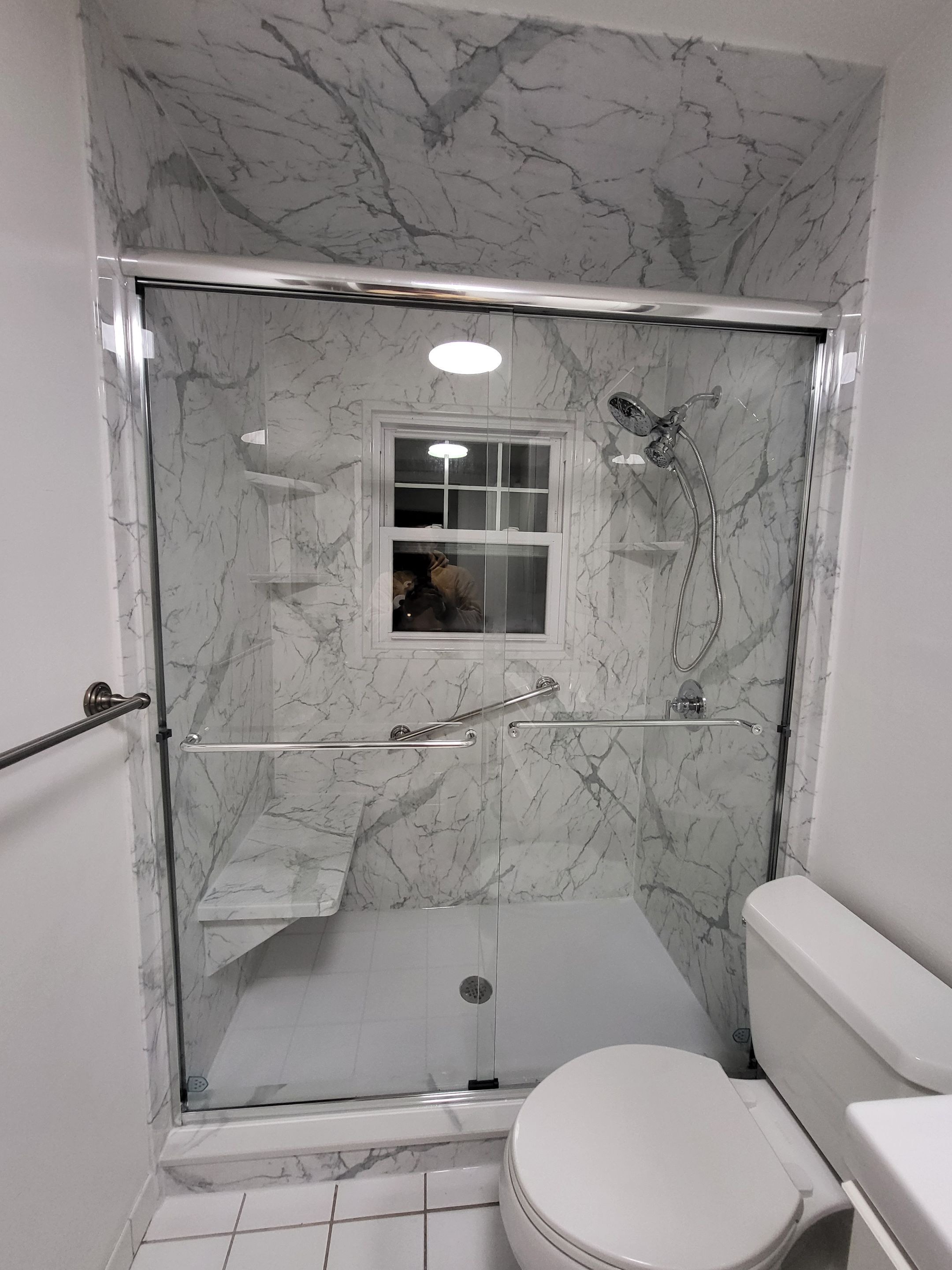
Accessible shower upgrades that don’t require a full remodel include:
- Low-threshold or step-in shower bases
- Slip-resistant shower flooring
- Clearer, wider entry points
In many cases, replacing just the shower base significantly improves access while keeping the existing walls, enclosure, and plumbing in place.
Adding Grab Bars for Stability and Support
When installed correctly, grab bars are one of the most effective ways to improve bathroom safety without changing your layout.
Modern grab bars:
- Improve balance and stability
- Reduce strain on joints
- Increase confidence when standing or moving
- Are available in finishes that match existing fixtures
Common locations include inside the shower, near the toilet, and along walls where balance support is helpful. Proper placement and secure installation into reinforced wall areas are essential.
Adding Seating Without Taking Up Space
Standing for long periods in the shower isn’t always comfortable or safe. Seating adds control, stability, and reassurance.
Accessible seating options include:
- Built-in shower benches
- Fold-down wall-mounted seats
- Stable, non-slip shower stools
Fold-down seating is especially useful in smaller bathrooms, offering support when needed and folding away neatly when not in use.
Upgrading Fixtures for Easier Handling
Small fixture changes can make a big difference—especially for people with limited grip strength or mobility.
Helpful fixture upgrades include:
- Handheld showerheads with adjustable height
- Single-handle or lever-style faucets
- Pressure-balanced or anti-scald temperature controls
These features improve control and ease of use without relocating plumbing.
Improving Lighting to Reduce Risk
Good lighting does more than improve visibility—it reduces hesitation, missteps, and fall risk in wet areas.
Lighting improvements that enhance safety include:
- Brighter, evenly distributed overhead lighting
- Task lighting near mirrors and showers
- Reducing shadows and dark corners
Better lighting helps you move through the bathroom with greater confidence and awareness.
Increasing Floor Safety Without Replacing Flooring
You don’t always need to replace your bathroom floor to improve traction.
Slip-resistant solutions include:
- Textured surface treatments
- Non-slip coatings
- Strategically placed non-slip mats
These options add grip underfoot while preserving your existing flooring.
Making Small Layout Adjustments That Improve Flow
Minor layout changes can make a bathroom easier to navigate without structural work.
Simple adjustments may include:
- Removing unnecessary obstacles
- Repositioning accessories for easier reach
- Improving clear space around key fixtures
Even small changes can make the bathroom feel more open and easier to use.
Who Accessibility Upgrades Are Right For
Accessibility improvements are a smart choice if you:
- Plan to stay in your home long-term
- Want to reduce fall risk before it becomes a problem
- Support a family member with changing mobility
- Are recovering from injury or surgery
- Prefer practical improvements over cosmetic upgrades
These changes focus on usability and safety—and often improve the experience for everyone.
Common Mistakes to Avoid When Improving Accessibility
When planning accessibility upgrades, avoid:
- Installing grab bars without proper wall reinforcement
- Choosing features based only on appearance
- Ignoring lighting and flooring safety
- Making changes without considering long-term use
A thoughtful, functional approach ensures upgrades deliver real benefits and lasting value.
You Don’t Need a Full Remodel to Improve Accessibility
Improving bathroom accessibility doesn’t have to be disruptive or overwhelming. With targeted upgrades focused on safety, comfort, and ease of use, many homeowners achieve meaningful improvements without a full renovation.
Working with experienced professionals helps ensure upgrades are practical, secure, and suited to your space—both now and in the future.
Common Questions About Bathroom Accessibility Upgrades
Can I make my bathroom more accessible without remodeling everything?
Yes. Many upgrades—such as grab bars, seating, lighting improvements, and low-threshold shower bases—can be added without a full renovation.
What is the easiest accessibility upgrade to start with?
Grab bars and handheld showerheads are often the fastest, most effective improvements with minimal disruption.
Are accessibility upgrades only for seniors?
No. Accessibility improvements benefit people of all ages by improving safety, comfort, and ease of use.
Will accessibility upgrades affect how my bathroom looks?
Modern accessibility features are designed to blend in with existing finishes and look clean and intentional when installed correctly.
Should accessibility upgrades be professionally installed?
Yes. Proper placement and secure installation are critical for safety and long-term reliability.
Ready to Make Your Bathroom Safer and Easier to Use?
If you’re thinking about improving bathroom accessibility without unnecessary disruption, All County One Day Bath can help. Our team works with your existing space to recommend practical upgrades that enhance safety, comfort, and long-term usability.
Contact All County One Day Bath today to speak with our experienced bathroom installers and take the next step toward a bathroom that truly works for you.
- or call -
We will be reaching out to you shortly!