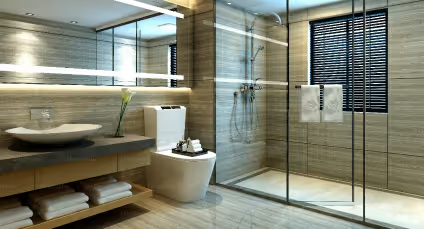
Is One Day Bath Remodeling Durable? What to Know
Table of Contents
- How Long Does One Day Bath Remodeling Actually Last?
- One-Day Bathroom Remodel Materials and How They Wear
- How Long Do Bath Liners Last vs. Full Shower Wall Systems?
- One-Day Bathroom Remodel Warranty: What Good Coverage Looks Like
- One-Day Shower Remodel Pros and Cons for Durability
- Installation Quality, Waterproofing, and Hidden Water Damage
- Conclusion: Making a Durable Choice With One Day Bath Remodeling
- Frequently Asked Questions
Last Updated: October 14, 2026
How Long Does One Day Bath Remodeling Actually Last?
A one day bath remodel can last 15 to 30 years when the materials and installation are done right. That's the short answer. The longer answer depends on what goes behind the walls, not just what you see.
At All County One Day Bath, we have over 20 years of service experience.
Most homeowners ask the same question: "Is one day bath remodeling durable, or is it just fast?" Speed and durability aren't opposites here. A prefabricated shower system can outlast a tiled wall if it's installed correctly.
Here's what actually determines how long your new bathroom lasts:
- The material used for walls and the shower pan
- How well the surface is sealed at seams and edges
- Whether the subfloor and plumbing were checked first
- The quality of the installation crew
Get those four things right, and a one-day remodel holds up for decades. Get them wrong, and you'll see problems within a few years.
One-Day Bathroom Remodel Materials and How They Wear
The materials decide most of the durability story, but "durable" is not one property. It is at least five: scratch resistance, stain resistance, impact and crack resistance, water and mold resistance, and repairability. A surface can be excellent at one and mediocre at another.
Here is how the common options actually differ.
Acrylic sheet (cast or coextruded). Non-porous, so water, soap scum, and hard-water minerals sit on the surface instead of soaking in. It resists mold and mildew because there is no food source in the material itself. It is also the most scratch-prone of the solid-surface options, a dropped tool or an abrasive cleanser can leave a mark.
Fiberglass-reinforced plastic (FRP). The familiar gelcoat-over-fiberglass construction used in many tub and shower surrounds. It is lighter and usually less expensive than acrylic. The weak point is the gelcoat: it can chalk, craze, or spider-crack over time, and once the gelcoat is compromised, the underlying fiberglass can absorb water.
Reinforced polymer composite panels. These are the multi-layer panels marketed as "high-tech polymer." They typically pair a decorative outer layer with a structural core. They tend to be stiffer than thin fiberglass, which reduces the flex-and-crack problem, and they hold color well.
Ceramic or porcelain tile with grout. The tile itself is extremely hard, scratch-resistant, and effectively non-porous. The grout between the tiles is the opposite: cement-based grout is porous, absorbs water and oils, stains, and supports mold growth if it stays damp. Grout also cracks as the substrate moves.
Cultured marble and solid-surface (acrylic-modified) panels. Non-porous and repairable, similar to acrylic, but generally heavier and more expensive, and less common in a true one-day install because of the fabrication and fitting time.
A practical way to think about it: tile wins on scratch resistance and loses on grout maintenance. Acrylic wins on cleanability and repairability and loses on scratch resistance. Fiberglass loses on both longevity and stiffness unless it is a thick, well-backed unit. Composite panels split the difference.
What most guides miss is that the material spec sheet is not the durability verdict. The panel is only as good as its backing. A rigid panel over a dry, solid, properly shimmed wall can last a generation.
How Long Do Bath Liners Last vs. Full Shower Wall Systems?
Bath liners and full wall systems are not the same thing, and they don't last the same amount of time.
A bath liner is a thin acrylic shell fitted over your existing tub or walls. It's a cover, not a replacement. Liners typically last 10 to 15 years. They can trap moisture between the old surface and the new one if the original wall was already wet.
A full shower wall system replaces the old walls entirely. Solid polymer or acrylic panels go up in place of the old surface. These usually last 20 to 30 years with basic care.
| Feature | Bath Liner | Full Wall System |
|---|---|---|
| What it does | Covers old surface | Replaces old surface |
| Typical lifespan | 10-15 years | 20-30 years |
| Hidden moisture risk | Higher | Lower |
| Best for | Quick refresh | Long-term durability |
If durability is your goal, a full replacement beats a cover every time. A liner over a damaged wall just hides a problem you'll pay for later.
One-Day Bathroom Remodel Warranty: What Good Coverage Looks Like
A warranty tells you how much the company trusts its own work, but only if you read what it actually covers. Most one-day bathroom warranties are two separate documents, and the split between them is where homeowners get surprised.
The product warranty covers the panels, pan, fixtures, and factory-supplied parts. It is issued by the manufacturer, not the installer. Lengths vary widely, some manufacturers offer a limited lifetime warranty on the wall panels, others offer 10 to 20 years, and some prorate coverage so the payout shrinks as the product ages. Read whether it is "limited" (almost always) and what the limitation is.
The installation or workmanship warranty covers the labor and the waterproofing, the seams, the caulk lines, the drain connection, the wall prep. This is the one that matters most, because most early failures are installation failures, not material failures. A panel does not usually fail on its own. A seam fails, a drain leaks, or a wall was not properly prepared. If your warranty covers only the parts, you can still be on the hook for the labor to fix a problem the labor caused.
Here is what to check before you sign:
- Length, separately. How many years on materials, and how many on labor? A long product warranty paired with a one-year labor warranty is a lopsided deal.
- Transferability. Can the warranty pass to a new owner if you sell the home? A transferable warranty can be a selling point; a non-transferable one dies with your ownership.
- What is excluded. Common exclusions include damage from abrasive or acidic cleaners, hard-water mineral buildup, misuse, and, importantly, pre-existing conditions in the wall or subfloor that were not part of the contracted scope.
- What voids it. Using the wrong cleaning product is the most common way homeowners accidentally void a surface warranty. If the manufacturer requires a specific cleaner, that is not a suggestion.
- Who performs service. Does the manufacturer send a part, or does the installer come out? Who pays the labor on a warranty repair? Get this in writing.
- Claim procedure and response time. How do you file a claim, and what is the stated response window? A warranty with no defined process is hard to enforce.
A common pattern in the industry is a strong product warranty backed by a thinner workmanship warranty. That is not automatically a red flag, but it does mean the installer is telling you where they expect problems to come from. If the workmanship coverage is short, ask why.
One more thing worth asking: what happens if the company you hired is no longer in business when you file a claim? Manufacturer product warranties usually survive, because the manufacturer is still there. Workmanship warranties do not, because there is no one left to honor them. That is a reason to weigh a company's track record and longevity, not just the number of years printed on the page.
One-Day Shower Remodel Pros and Cons for Durability
Weighing the one-day shower remodel pros and cons helps you set the right expectations.
Pros:
- Fast install means almost no bathroom downtime
- Non-porous surfaces resist mold and stains
- Fewer seams than tile means fewer failure points
- Easy to clean, which helps seniors age in place
- Often a fraction of the cost of a full traditional remodel
Cons:
- Not every bathroom qualifies; hidden damage can extend the timeline
- A liner-style job won't last as long as a full wall replacement
- Color and style choices may be more limited than custom tile
- Poor installation by a low-quality crew can fail early
The honest take: the "one day" promise holds for most standard bathrooms. But if we open the wall and find rotted wood or a bad subfloor, that work has to happen first. Rushing past it would be the real mistake.
Installation Quality, Waterproofing, and Hidden Water Damage
Durability lives or dies at the seams, the drain, and the wall behind the panels.

Waterproofing is the layer that keeps moisture out of your walls and floor. When it's done right, the shower stays dry behind the surface. When it's skipped, water finds a way in.
Here's what a careful install includes:
- Wall preparation: remove old material, check for soft spots and mold
- Subfloor check: confirm the floor is solid and level before the pan goes down
- Drain connection: seal it tight to prevent slow leaks
- Seam sealing: caulk every joint with the right product
- Leak testing: run water and confirm no drips before finishing
Hidden water damage is the biggest risk in any bathroom remodel. Old tubs and showers often leak for years before anyone notices. By the time you see a stain, the wood behind the wall may already be soft.
This is why we inspect before we install. If we find rot or a failing subfloor, we fix it first. That step is what makes the finished bathroom last.
Conclusion: Making a Durable Choice With One Day Bath Remodeling
The real question isn't whether a one day bath remodel is durable. It's whether the company doing it cares about what's behind the walls.
A fast install with cheap materials over a wet subfloor will fail. A fast install with quality polymer panels, solid waterproofing, and a careful crew can last for decades.
That's the difference we build our work around at All County One Day Bath. We use 100% non-porous high-tech polymer materials, back our work with a 100% satisfaction guarantee, and offer flexible financing with $0 down and 0% APR. We've served our community for over 20 years, and we stand behind every install.
Get a Free Quote from All County One Day Bath and get a bathroom that's built to last.
Frequently Asked Questions
Is a one-day bathroom remodel durable?
Yes, when it uses non-porous polymer materials and proper installation. These surfaces resist mold, cracking, and staining better than traditional grout and tile. Durability depends on correct wall preparation, sealed seams, and a tested drain connection. Ask the contractor what material is used and how the installation is waterproofed, since those details determine whether the remodel holds up for years.
How long do bath liners and shower wall systems last?
Bath liners and acrylic wall systems can last for many years with regular cleaning. Liners placed over existing tubs may have a shorter lifespan if the surface underneath was not fully prepared. Full shower wall systems with sealed, non-porous panels often have a longer lifespan because there are fewer seams and no grout to fail. Proper maintenance extends the life of either option.
Can a one-day bathroom remodel cover water damage or mold?
Sometimes, but it depends on the extent. Minor surface mold can be treated before new panels go up. Significant water damage to the subfloor or wall framing may require structural repairs that extend the timeline beyond one day. A reputable contractor inspects for hidden damage during the pre-installation measurement and tells you upfront if the project scope needs to change.
Does a one-day bathroom remodel include plumbing changes?
Most one-day remodels keep plumbing fixtures in their existing locations to avoid opening walls and extending the timeline. Drain connections are reconnected and tested, but moving a drain or relocating a shower valve usually requires more than a day. If your project needs plumbing relocation, ask the contractor how that affects the schedule and cost before work begins.
- or call -
We will be reaching out to you shortly!